What changed
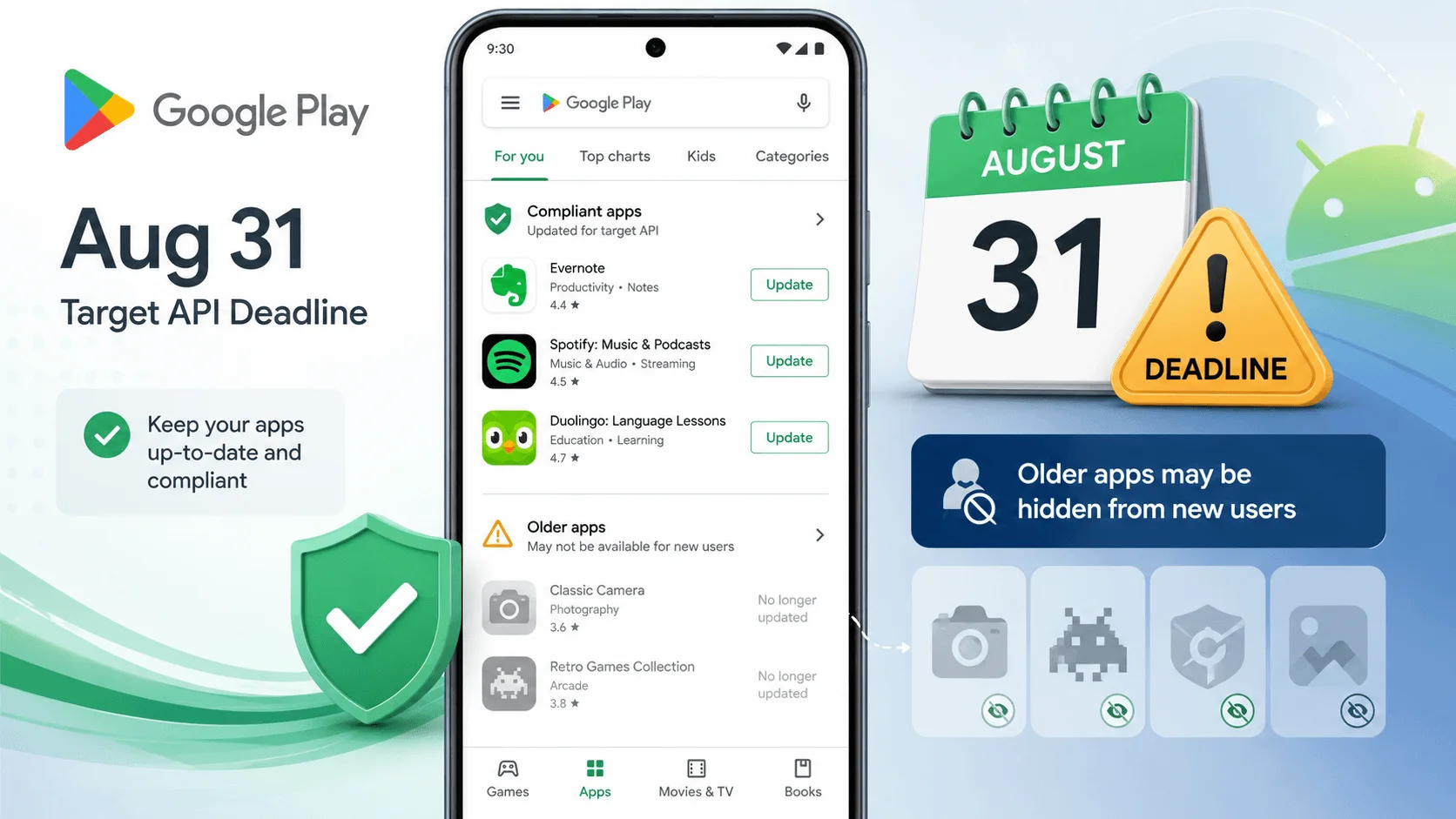
Starting August 31, 2026, Google Play requires most new apps and app updates to target Android 16, API level 36, or higher. The platform also applies a separate availability rule to existing apps: most existing apps must target Android 15, API level 35, or higher to remain available to new users whose devices run an Android version newer than the app’s target API level. Google says developers who need more time can request an extension to November 1, 2026 through Play Console. Wear OS and Android Automotive OS use a lower API 35 submission threshold, while Android TV and Android XR use API 34.
Why it matters
This is not only a build-system maintenance deadline. For teams still shipping an older target SDK, August 31 can stop new releases from being accepted; for neglected or maintenance-mode apps, falling below the existing-app threshold can narrow acquisition by making the app unavailable to new users on newer Android versions. Raising targetSdkVersion can also activate Android 16 behavior changes, so the safe path is a tested migration rather than a last-minute manifest edit. SaaS and independent developers with companion Android apps should treat Play distribution as a versioned platform dependency with an explicit annual maintenance budget.
New apps and updates move to API 36
For ordinary Android phone and tablet apps, Google Play requires new submissions and app updates from August 31 to target Android 16 / API level 36 or higher. The requirement is different for some form factors: Wear OS and Android Automotive OS apps need API 35 or higher, while Android TV and Android XR apps need API 34 or higher. Builders should verify the exact targetSdkVersion in the release artifact rather than assuming a newer compile SDK or Android Studio version satisfies the policy.
Existing apps face a separate discovery rule
An app that is already published does not simply disappear from every device when it misses the newest submission target. Instead, most existing apps need to target API 35 or higher to remain available to new users on devices running an Android version newer than the app’s target API level. Apps below that threshold remain available on devices running an Android version equal to or older than the app’s target. That makes the commercial consequence a distribution restriction rather than an immediate universal shutdown.
API 36 can change runtime behavior
Moving targetSdkVersion forward opts an app into Android 16 target-specific behavior changes. Google’s migration guidance calls out changes that can require code and UX work rather than a configuration-only bump, including edge-to-edge enforcement changes, predictive-back behavior and other platform restrictions. Teams should therefore test core navigation, layouts, permissions, background behavior, SDK dependencies and device compatibility against an API 36-targeting build before submitting it.
There is an extension path, but it should not replace migration work
Google says developers who need additional time can request an extension to November 1, 2026, with extension forms available through Play Console. That gives teams a fallback for a migration that cannot be safely completed by August 31, but it does not remove the underlying target-API requirement. Owners of low-maintenance apps should use the extra window to decide whether the app remains supported, needs a tested target-SDK upgrade, or should be deliberately left with narrower new-user availability.